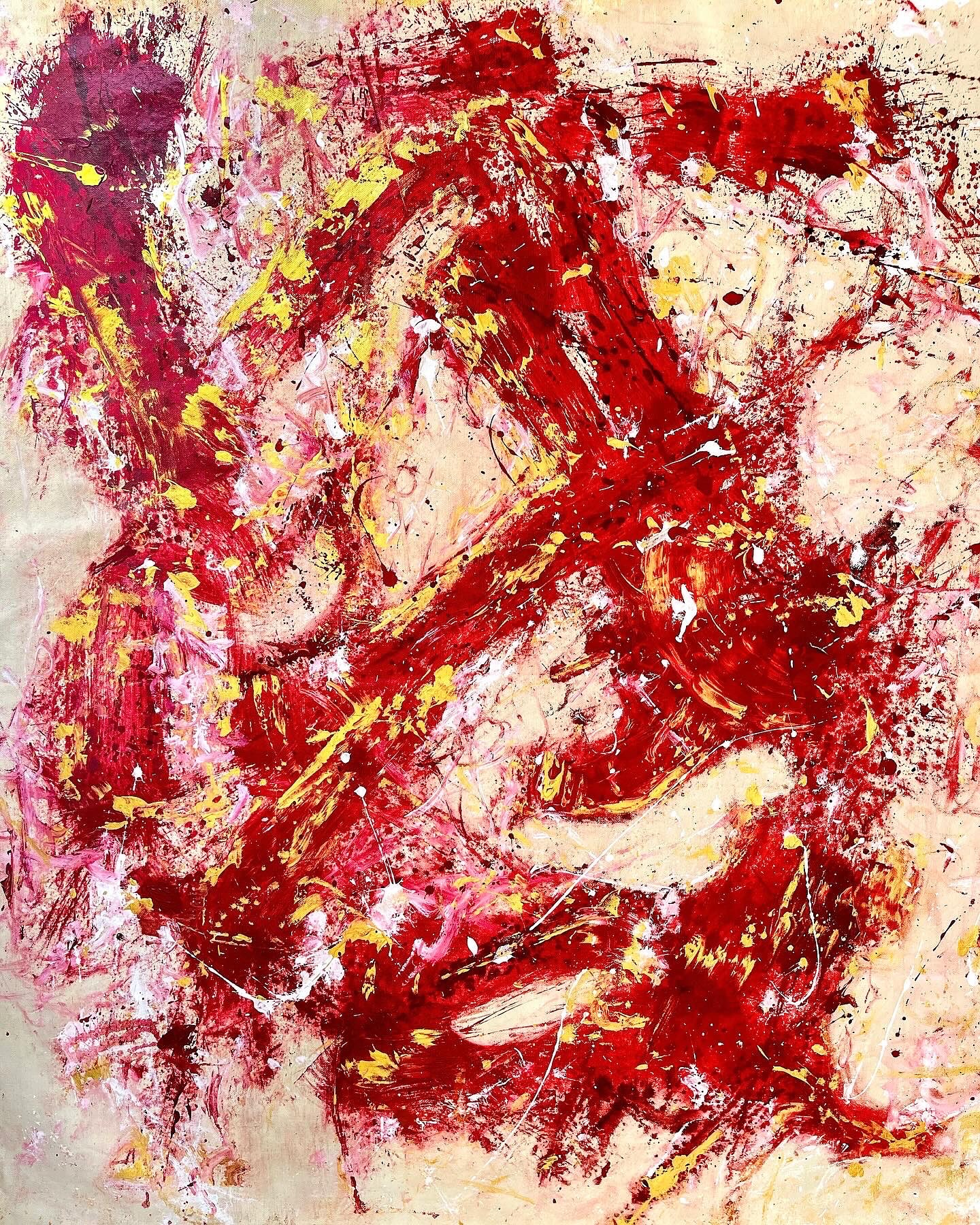
When I moved to Paris in September 2023, I arrived during a season of cold and scarce light. That darkness became the catalyst for my most significant artistic breakthrough—the refraction collection that now defines my work. But to understand how I arrived at that moment, you need to know the path that brought me here.
Roots in Panama City
I was born in 2002 in Panama City, where my Spanish-Panamanian heritage shaped my earliest understanding of identity and expression. Before I ever picked up a paintbrush with intention, I was a pianist. Music taught me about rhythm, composition, and the emotional weight that silence can carry. Those years at the piano weren't separate from my visual art—they were its foundation.
My formal journey as a visual artist began in 2020, a year that forced the entire world into isolation. While the pandemic shuttered galleries and separated communities, it also created space for introspection. I started sharing my work publicly for the first time, posting abstract expressionist pieces that explored color relationships and geometric form.
Creating Community During Crisis
The lockdown period in Panama became unexpectedly generative. I wasn't just creating art in isolation—I was building connection through it. I hosted art webinars for children, offering young people a creative outlet during a frightening, uncertain time. Watching kids discover their own visual language reminded me why art matters: it's a trace of identity and transformation, accessible to anyone willing to engage with it.
During this same period, I began developing the technique that would become my signature: chromatic flattening. I experimented with metals, pastes, and acrylics on self-primed canvases, pouring fluids into structured elements and allowing colors to coalesce organically. The work wasn't about control—it was about creating conditions for something to emerge.
The Madrid Chapter: First Steps Into the International Scene
In 2020, while still based in Panama, I collaborated with Artisan & Co in Madrid. They exhibited my Panamanian Collection, marking my first formal presentation to a European audience. That experience opened a door I hadn't known existed.
By February 2024, I returned to Madrid for my first solo exhibition. Standing in that gallery, watching strangers spend time with my work, I understood something fundamental: abstract art isn't complete until the observer brings their own experience to it. The piece exists in the space between what I create and what someone else perceives.

Madrid also introduced me to the pace and density of European art culture. The collections I developed there—including a piece called "Symphony," a nod to my musical background—reflected this new environmental influence. Urban rhythms, architectural geometry, the way light moves through narrow streets: all of it seeped into the work.
Paris: Immersion and Transformation
Moving to Paris in September 2023 wasn't just a geographic shift—it was a deliberate immersion into one of the world's most vibrant contemporary art scenes. I came to learn, to be challenged, to exist among artists whose work I admired.
That first winter was difficult. The lack of light felt oppressive after Panama's constant sun. But constraints breed creativity. I became fascinated by refraction—the way light bends when it passes through different mediums, the way it reveals hidden structures, the way a simple phenomenon can trigger profound introspection.
This fascination led directly to "Composition of a Refraction," the work that would later be selected by a prestigious jury for a group exhibition at Fundación Los Carbonel in September 2024. Only ten artists were chosen. The piece consists of 115 active and inactive fragments, each one representing a phase of the refractive process: the incident, the point of incidence, and the refraction itself.

Paris taught me that geographic displacement isn't loss—it's material. The cold, the darkness, the anonymity of a new city: these became the conceptual foundation for my most mature work to date.
Building an International Collector Base
At 23, I now have collectors in Germany, the United States, France, and Panama. This isn't something I planned—it emerged from consistent work and genuine engagement with the communities I've been part of. Each geography brings its own perspective to the work, which is exactly what abstract expressionism demands.
I'm represented on platforms like Saatchi Art, Artsper, and Singulart, which connect my work with audiences I'd never reach through galleries alone. Social media, particularly Instagram (@annieabstracts), has become a crucial tool for sharing process and building relationships with people who care about contemporary abstract art.
Art as Social Responsibility
Success as an artist comes with responsibility. I donate a portion of my earnings to support an orphanage for children with HIV in Colón, Panama—the Albergue de Maria Foundation. Art exists within a social context. If my work invites introspection and reflection, then my practice should extend that same care into the world beyond the canvas.
This isn't separate from my artistic philosophy—it's integral to it. I believe art should create space for being, not impose meaning. Similarly, meaningful action should create space for others to thrive.
What Paris Is Teaching Me Now
The Paris collection I'm developing explores movement in ways my earlier work didn't. Urban rhythms, the constant flux of city life, the way light interacts with motion—these have become new entry points into the refraction concept.
I'm also learning that artistic growth isn't linear. Some days I return to techniques I used in Panama. Other days I'm experimenting with approaches I couldn't have imagined a year ago. The canvas evolves like lived experience: layers are applied, scraped, recontextualized, but the essential energy endures.
The Role of the Observer
One thing has remained constant across Panama, Madrid, and Paris: the work is incomplete without you. My goal isn't to impose meaning but to create conditions for dialogue—between viewer and material, between your experience and mine, between the everyday and the transcendent.
Abstract expressionism at its best offers a pause, a moment of presence in a world designed to distract. Whether you encounter my work in a gallery in Madrid, on a screen in Germany, or in a collector's home in the United States, my hope is that it creates space for that pause.
What's Next
I'm continuing to expand the refraction collection, exploring how light, geometry, and the human-spiritual experience intersect. There are solo exhibitions in development, new collaborative projects taking shape, and always—always—the daily practice of showing up in the studio.
The journey from Panama to Paris isn't a straight line. It's more like the refractions I paint: light bending through different mediums, revealing unexpected structures, transforming the ordinary into something worth examining closely.
If you're interested in following this journey, you can see my latest work and process on Instagram @annieabstracts or explore my full collections at annieabstracts.com/collections/.