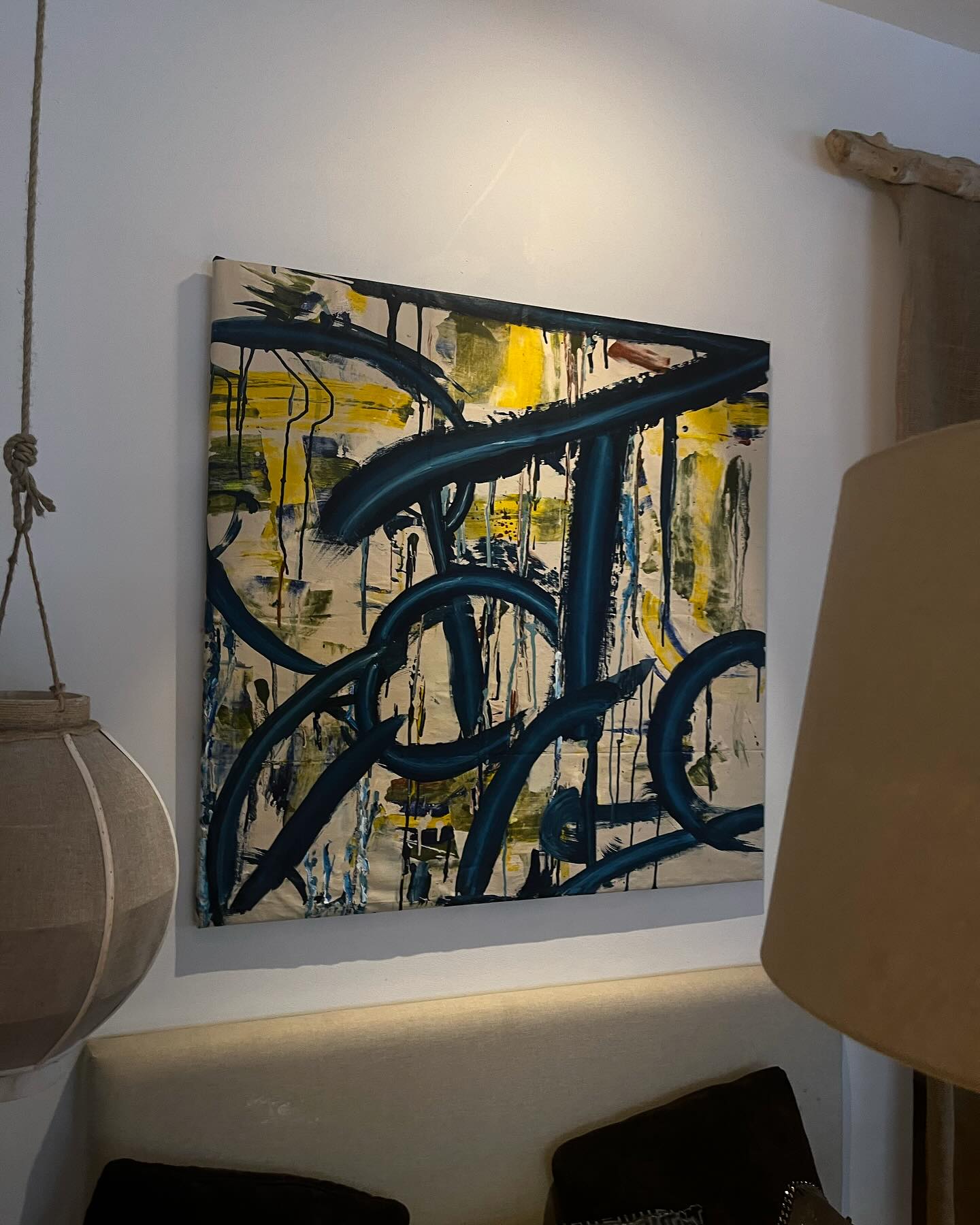
Abstract expressionism gets dismissed sometimes as emotionally empty—pure form without content, aesthetic gesture without meaning. People say it's lazy or elitist or self-indulgent.
I think the opposite is true. Abstract expressionism is one of the most emotionally rigorous art forms available. It requires translating internal states into visual language without the scaffolding of representation. It demands that emotion, stripped of narrative or recognizable form, somehow communicate authentically.
That's extraordinarily difficult. And extraordinarily powerful when it works.
The Problem with Representation
A representational painting of grief—a crying figure, a dark landscape, recognizable symbols of loss—tells you about grief intellectually. You see the image, you decode its meaning, you understand the artist intended to communicate sadness.
But you experience it from outside. It's depiction. You observe the representation rather than participate in the feeling.
Abstract expressionism approaches emotion differently. Instead of depicting emotion, it creates conditions for experiencing something analogous to the emotion that motivated the work.
Emotion as Structure
Abstract expressionism requires understanding emotion not as sentimental content but as structural principle. How does urgency move through a composition? How does calm reveal itself visually? How does transformation (emotional or otherwise) become visible?
In my work, I think about emotion as architecture. The "Show Me a Feeling" series emerged from asking: What does emotional vulnerability look like as formal structure? What visual languages express containment, release, exposure?
Vulnerability appears as thin washes—areas where protection is minimal, where the work is exposed. Intensity appears as saturated, vibrating color combinations. Release appears as controlled chaos, where forms break their boundaries.
The Observer's Participation
A crucial difference between representation and abstraction: In abstract art, the viewer's internal state becomes part of the work's meaning.
When you look at a representational painting of grief, you interpret the artist's depiction of grief from a stable external position. Your emotional state might affect how deeply you engage, but the meaning is relatively fixed.
When you stand in front of abstract expressionist work, your own emotional landscape becomes active. The colors vibrate differently depending on your mood. The composition suggests different narratives depending on what you bring. The work becomes a mirror for internal states you might not have fully conscious access to.
Personal Emotional Honesty
My most powerful work emerges when I create from genuine internal need rather than external goal. When I have something I need to express emotionally and find the formal means to express it.
That honesty can't be faked. Viewers sense when work is authentic versus when it's technically accomplished but emotionally empty. Abstract expressionism in particular demands emotional authenticity. The formal innovations mean nothing without authentic feeling behind them.