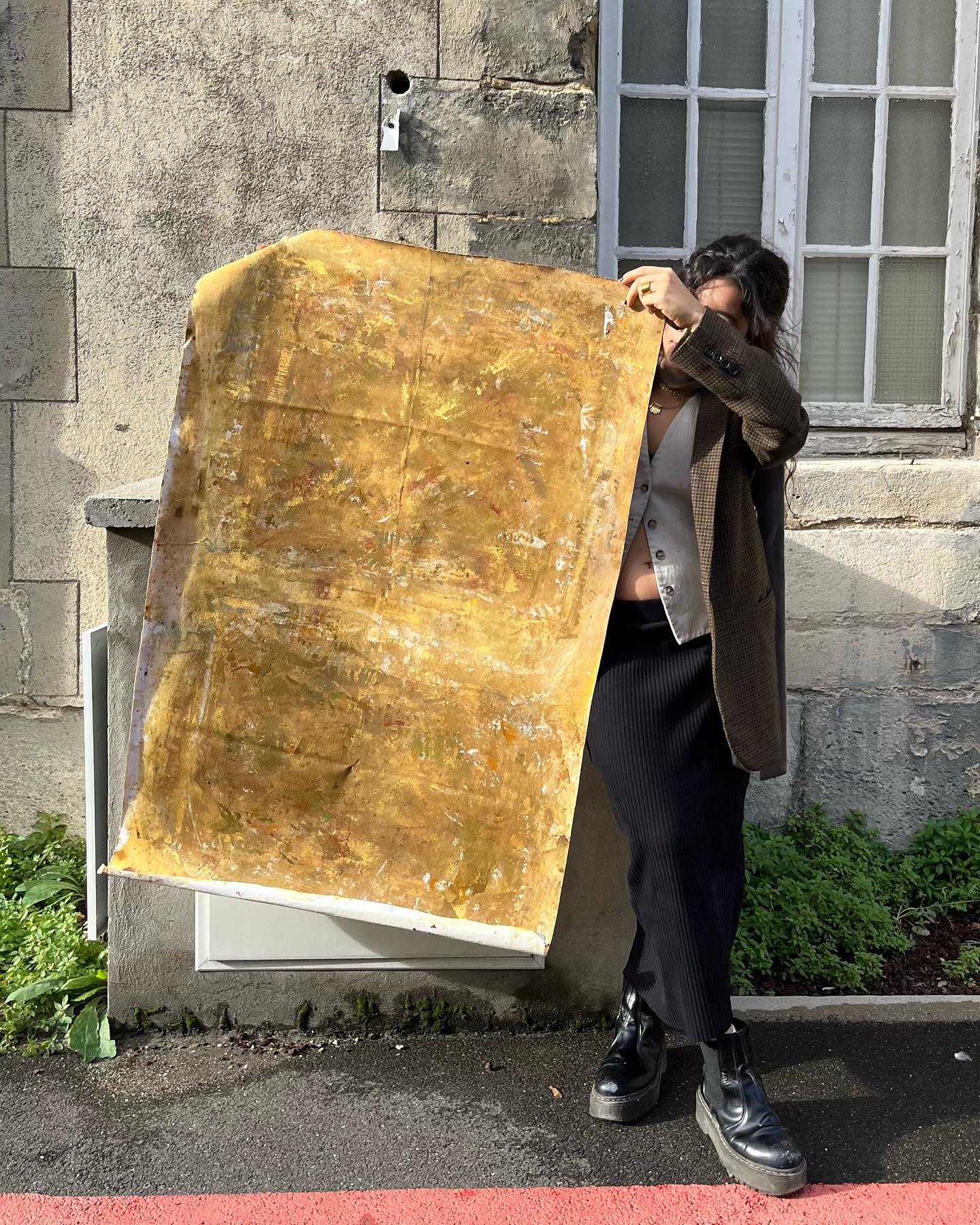
Three continents. Two languages. One artistic obsession that evolved with every border I crossed.
My journey as an abstract expressionist artist isn't a linear story—it's a series of thresholds, each one demanding I reinvent how I see light, color, and human connection. I didn't plan to become the artist I am today by moving between continents. But every geographic shift forced me to ask different questions about my work.
Roots in Panama: Where It Began
I was born in Panama City, where art wasn't a quiet pursuit—it was survival. The visual intensity of tropical light, the layered complexity of urban density, the vibrant chaos of cultural intersection. From childhood, I understood that color wasn't decoration. It was communication.
Growing up in Panama meant living in a place where abstraction made sense. The city itself is abstract: constant movement, overlapping languages, fragmented perspectives colliding into something coherent. My early work reflected this—chaotic, energetic, searching for order within complexity.
But Panama also taught me something crucial: how to move between worlds. My Spanish-Panamanian heritage meant existing between cultures, between identities. That experience of living in threshold spaces became foundational to my practice.
In 2020, I began sharing my work publicly—initially through online channels during the pandemic when the world moved into our homes. Digital platforms became my first gallery. The distance of screens somehow made honesty possible. I could experiment without the pressure of physical exhibition.
Madrid: The Threshold Year
In 2020, I made the decision to move to Madrid. Looking back, I think I was searching for something—a different light, a different artistic community, a place that would push me beyond what I'd already learned in Panama.
Madrid gave me that and more.
Working in Spain connected me to a centuries-long tradition of abstract expressionism and color theory. Walking through the Prado, seeing how Spanish masters understood light and form, transformed how I approached my own practice. I wasn't just creating in isolation anymore—I was in dialogue with an artistic history.
My Panamanian collection, exhibited through Artisan & Co in Madrid in 2020, represented my first serious engagement with professional gallery representation. The work was still finding itself—the form was there, but the philosophy was still developing.
Madrid also taught me about the European art market, about curator relationships, about how geographic location affects which collectors discover your work. I learned that moving wasn't just personal transformation—it was practical strategy for artistic development.
The Madrid Years: Building Momentum
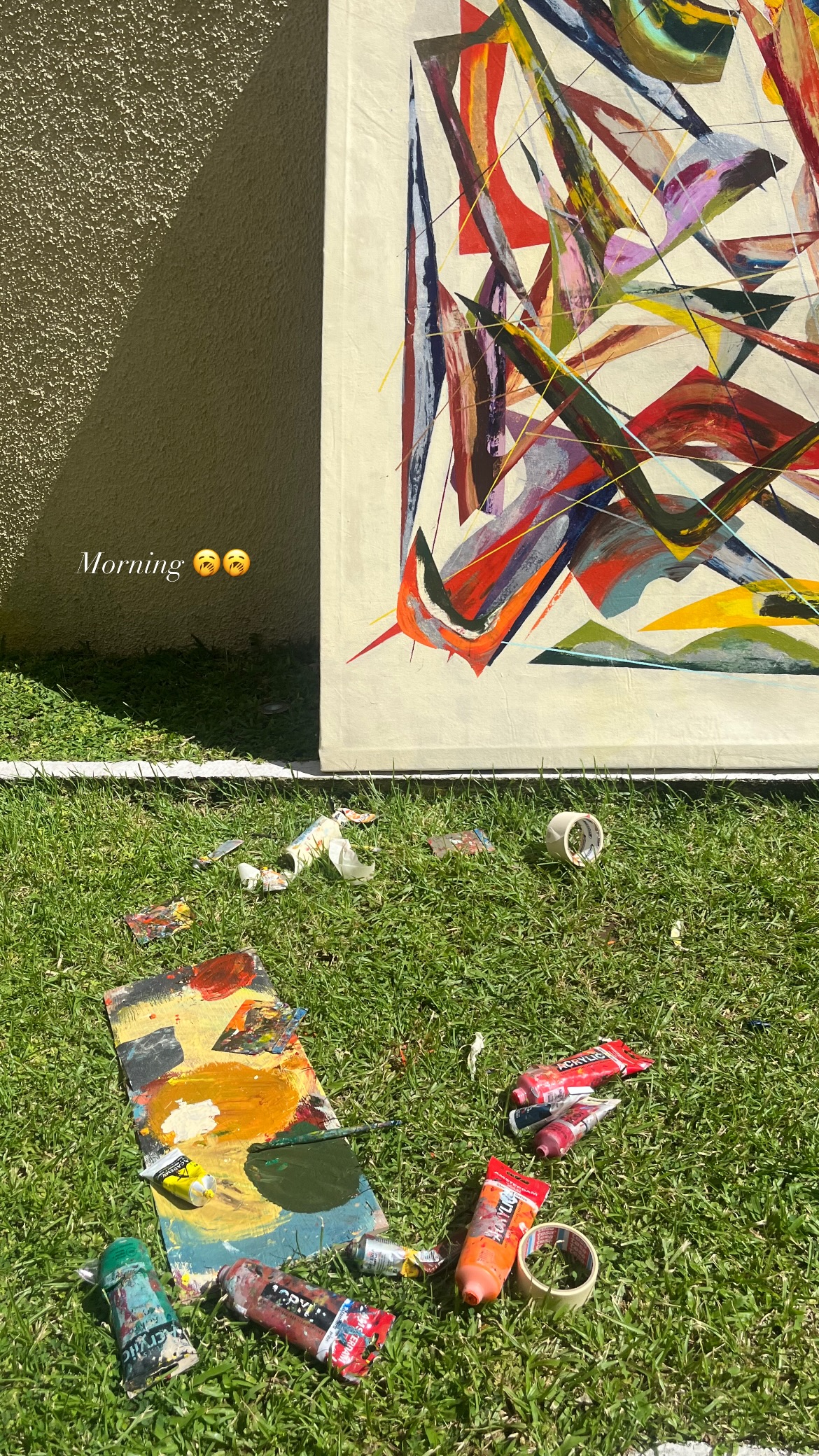
Between 2020 and 2023, Madrid became my laboratory. I continued exhibiting, deepening my technical practice, building relationships with galleries and collectors. I created the Madrid Collection, including work titled "Symphony"—pieces that began exploring the relationship between color and emotional resonance.
During those years, I developed my signature chromatic flattening technique. It wasn't an overnight discovery—it emerged through countless hours in studio, pouring acrylics, studying color theory, experimenting with how saturated colors could coalesce and merge. Each work taught me something. Each failure clarified what I was actually trying to do.
Madrid represented a period of technical mastery. I was learning to execute the work that existed in my mind. The city's structure, its order, its relationship to light—all of it influenced how I approached composition.
But by 2023, I felt the pull toward something new.

Paris: Refraction and Reinvention
I moved to Paris in September 2023 expecting artistic stimulation. What I found was creative constraint.
The Parisian winter hit differently than any cold I'd experienced. Coming from Panama's relentless sunshine, arriving in a city entering its darkest months felt like sensory deprivation. I remember those first weeks walking through gray afternoons, watching how the limited light fractured and bent through rain, through windows, through the geometry of Haussmann buildings.
Instead of depressing me, the scarcity of light obsessed me.
That's when refraction stopped being a casual observation and became the central metaphor of my work. Watching light bend through darkness, studying how refractions revealed complexity in ordinary moments—this became my subject. The physics of light became a framework for understanding presence, transition, transformation.
Paris didn't just inspire new work. It forced me to ask why I create. The city's emphasis on intellectual rigor, on philosophical depth, on dialogues between art and meaning—it pushed me beyond technical facility into conceptual territory.
My first solo exhibition happened in February 2024 in Madrid, but creatively, I was already in Paris, already embedded in the refraction research that would define this collection. The geographic displacement created the mental space to evolve.
What Each Place Taught Me
Panama taught me that intensity and chaos contain their own logic. That cultural intersection generates visual richness. That I could exist between multiple identities and use that multiplicity as artistic fuel.
Madrid taught me discipline. How to build a practice systematically. How to engage with tradition while creating something contemporary. How to navigate professional relationships with curators and galleries. How to execute technically demanding work.
Paris taught me depth. How constraint generates focus. How scarcity of light can illuminate meaning. How philosophy and aesthetics interweave. How to ask bigger questions about what art does and what it means to create space for introspection.
Each location became a phase of artistic development—not distinct, but layered. The Panama energy still lives in my work. The Madrid discipline shapes how I approach composition. The Paris philosophy guides my conceptual framework.
Geographic Displacement as Creative Method
I don't think you can grow as an artist without encountering visual and cultural dissonance. Moving between continents forced me to adapt, to notice what was essential in my practice versus what was simply habit.
Every move taught me that art isn't made in isolation. It's made in response to specific light, specific communities, specific historical moments. The same person creating in Panama's tropical intensity would make different work in Madrid's structured order or Paris's intellectual atmosphere.
But geographic movement also risks displacement. It's easy to lose coherence, to become a tourist in artistic practice rather than a committed creator. What saved me was maintaining one central obsession—the relationship between light, form, and human presence—that persisted through every geographic shift.
Where I'm Headed
I'm still in Paris, and I'm still discovering what this city teaches me. But I don't think geography ends here. I'm learning that artistic growth might require continuing to move, to encounter new light, new artistic communities, new thresholds that force evolution.
What I know is this: I wouldn't be the artist I am without having moved. Without having crossed thresholds. Without having allowed geographic displacement to push me toward deeper questions about my work.
Every passport stamp represents a layer in my artistic practice. Every city a new vocabulary. Every threshold a moment where I had to reinvent myself and my work.