The Three Elements
of a Refraction Collection
2024-2025
2024-2025
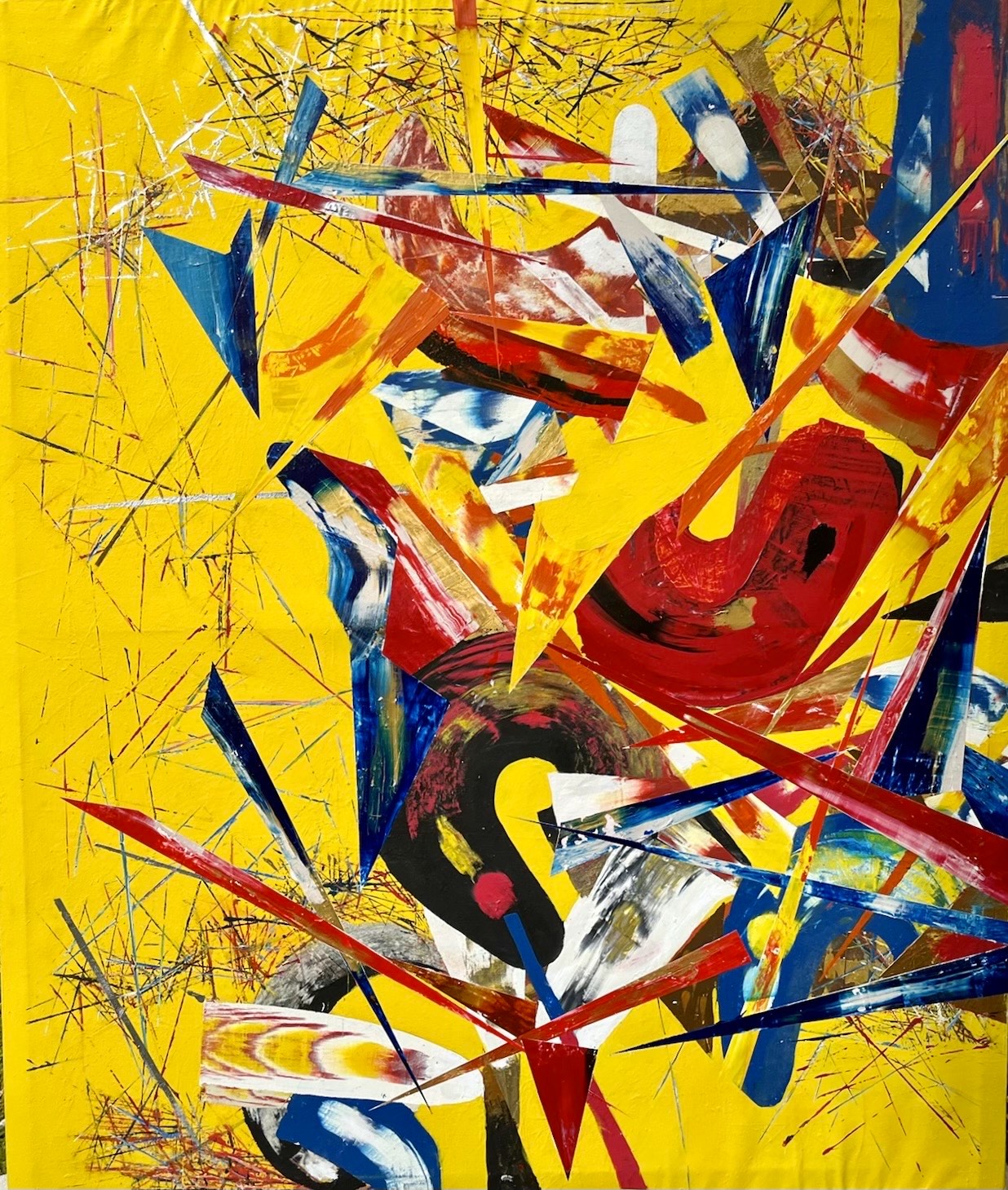
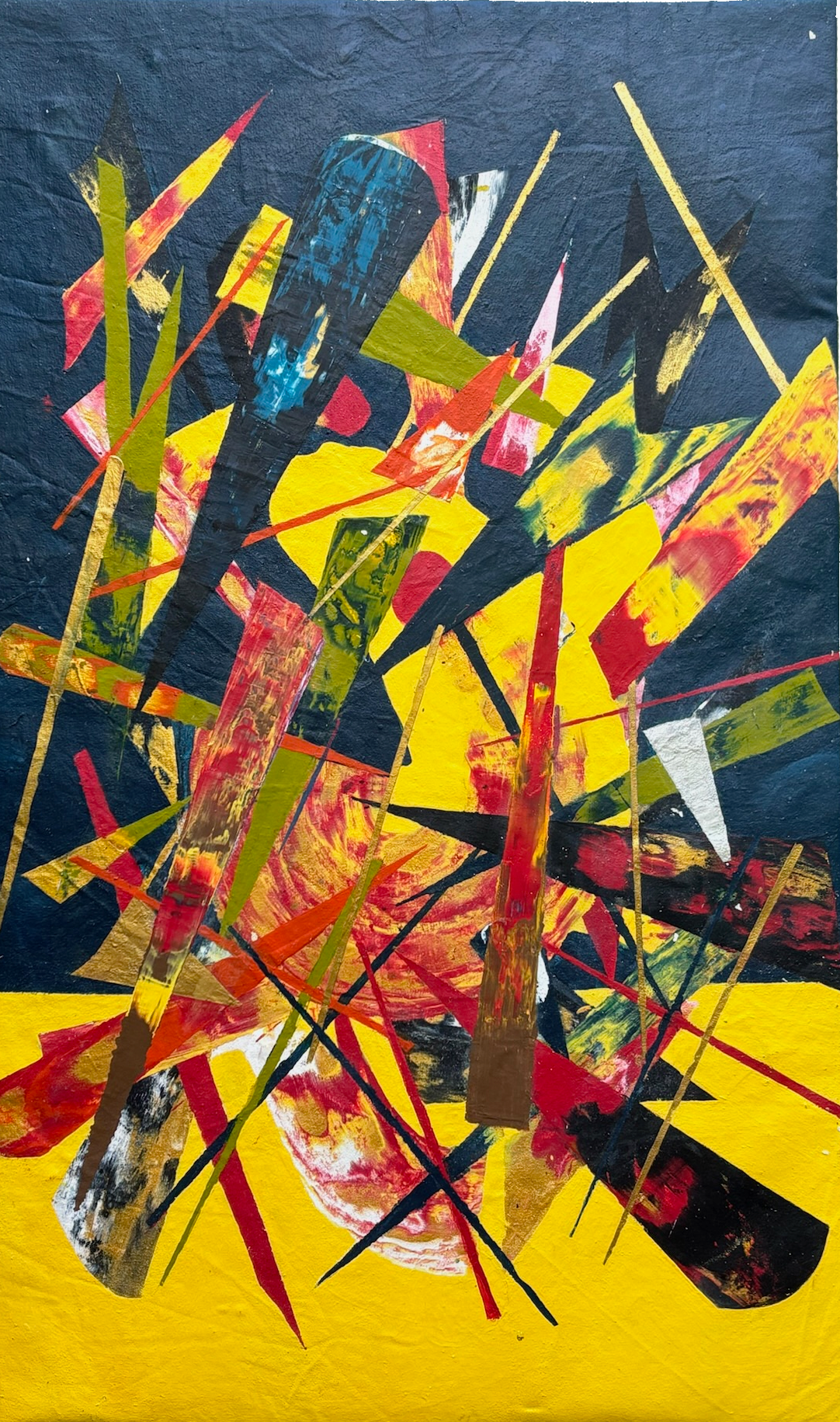
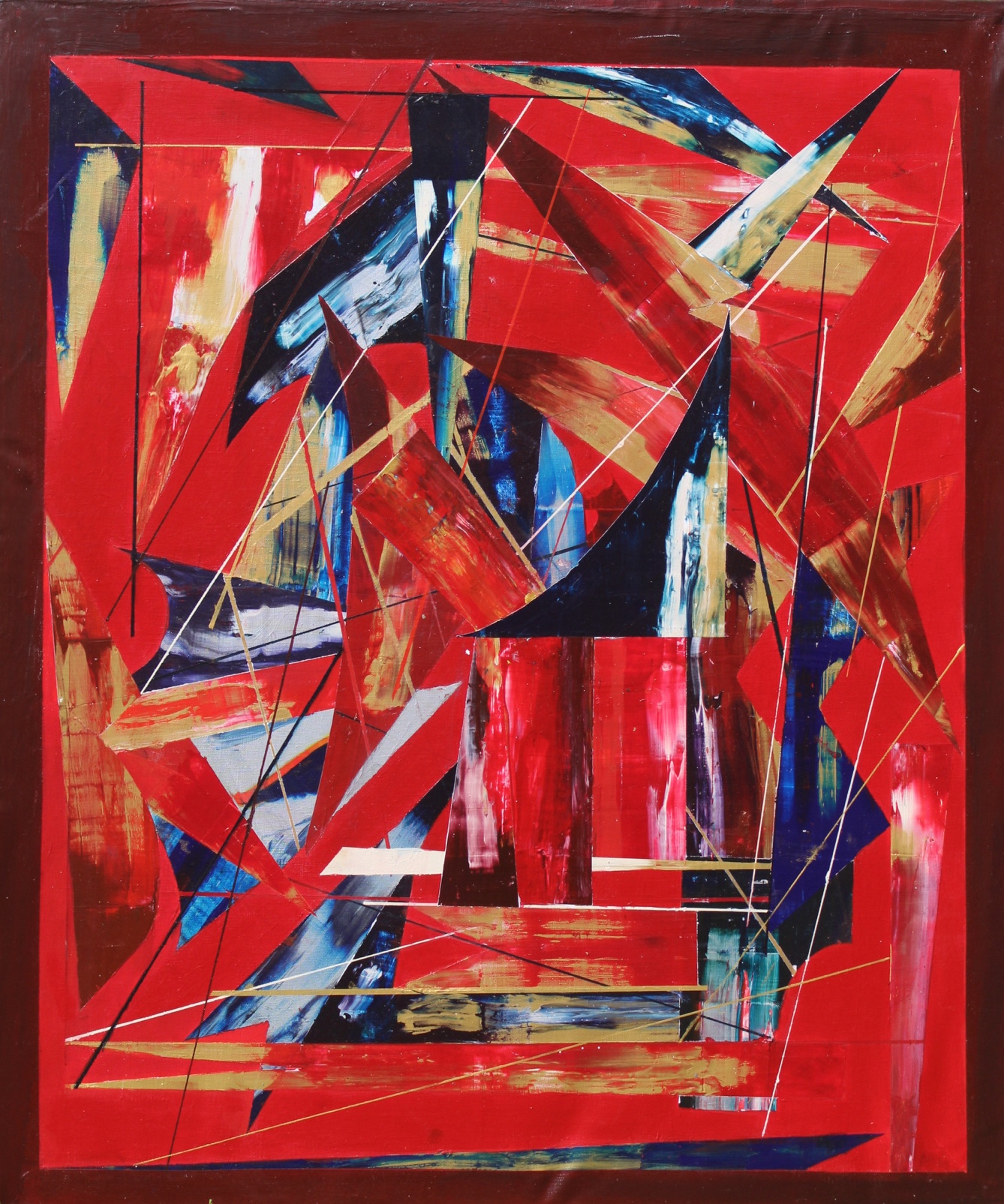
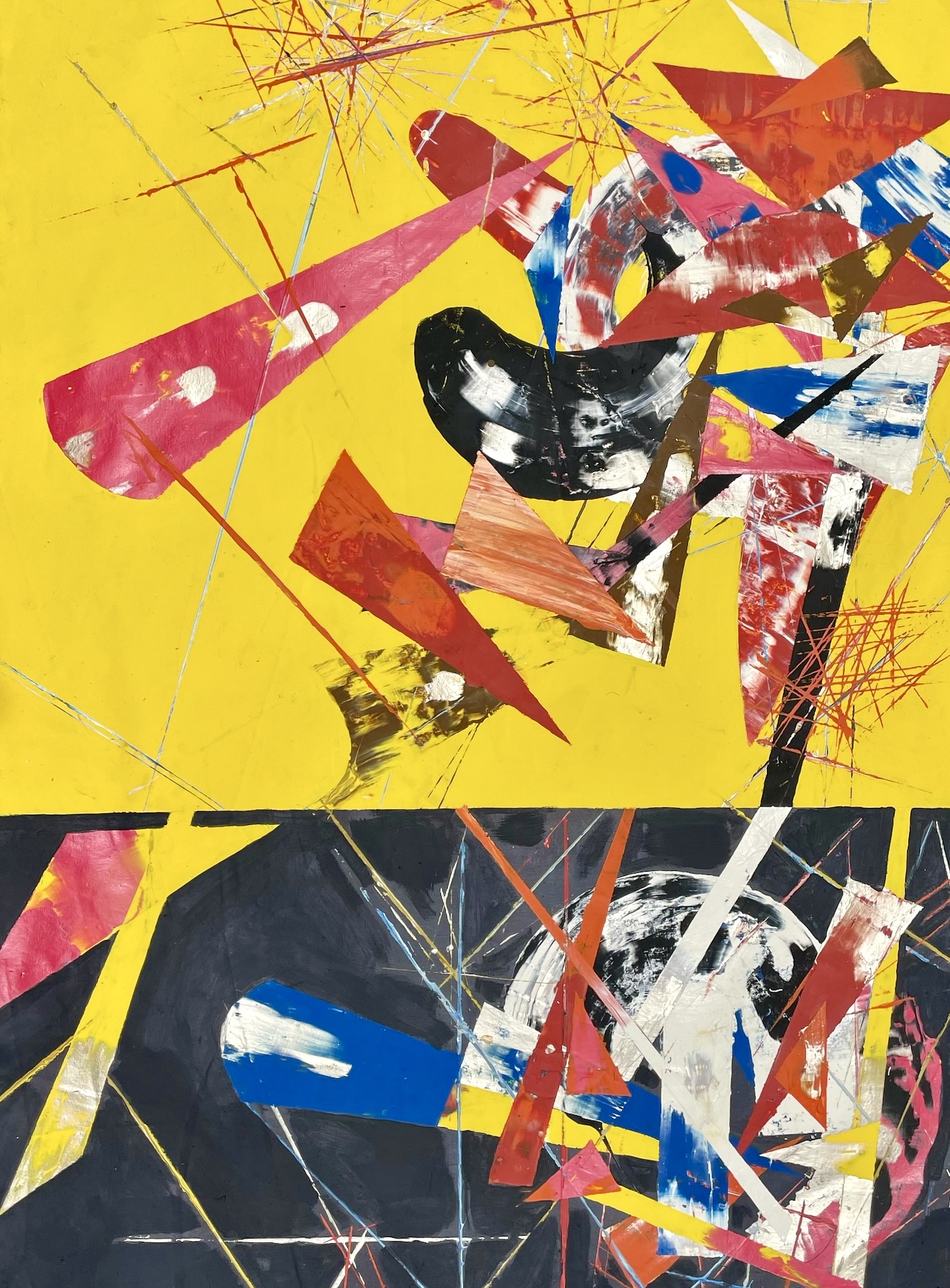
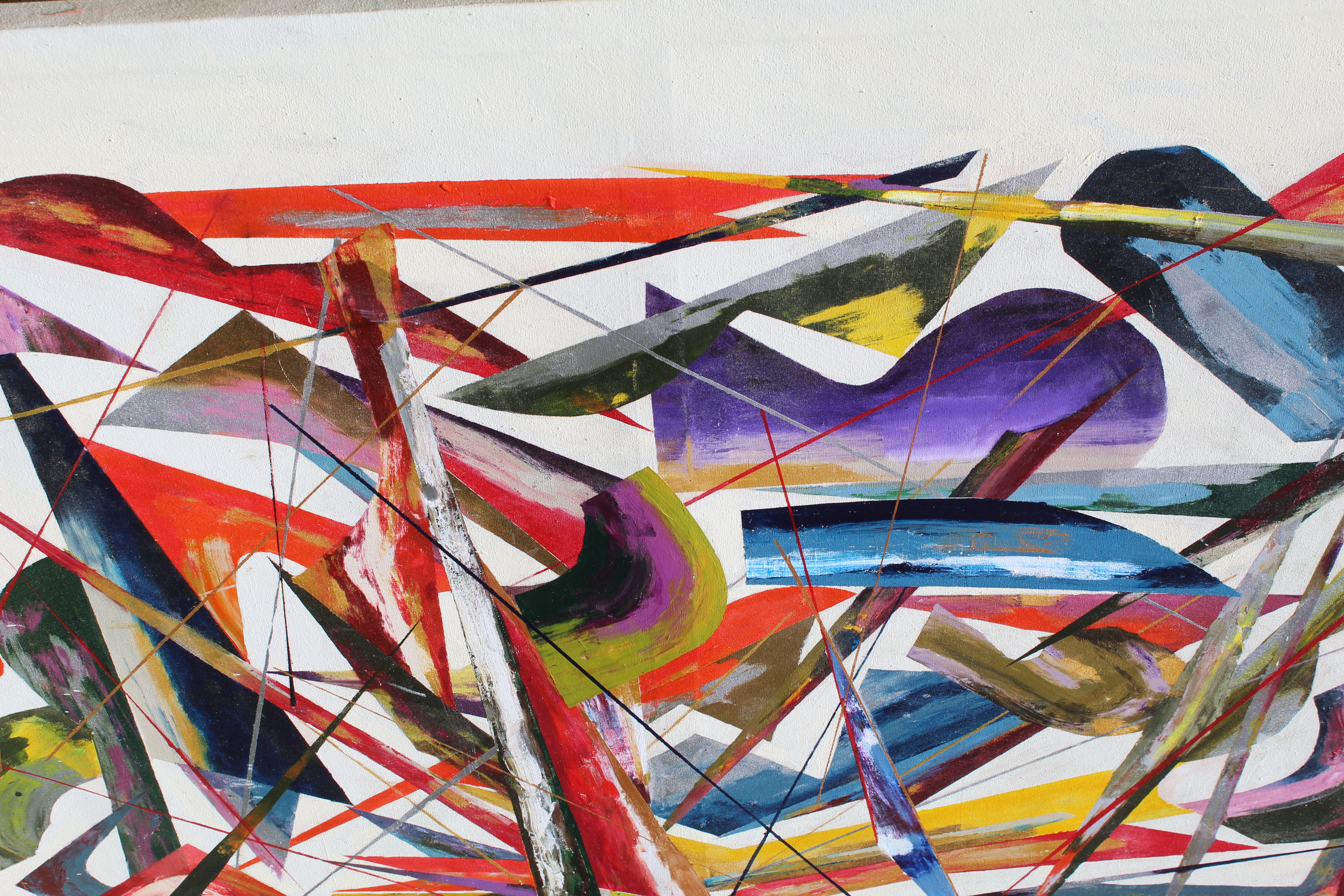
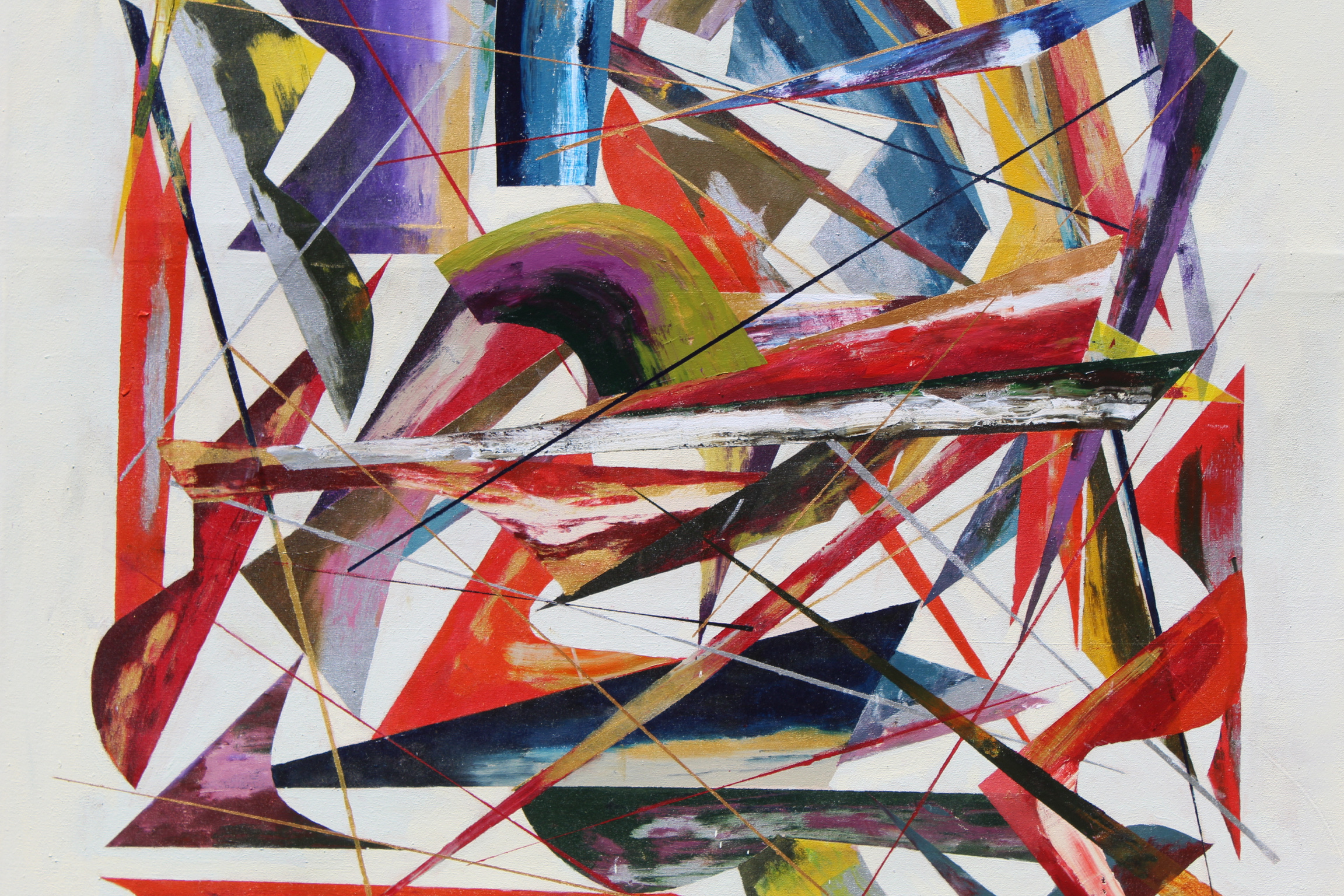
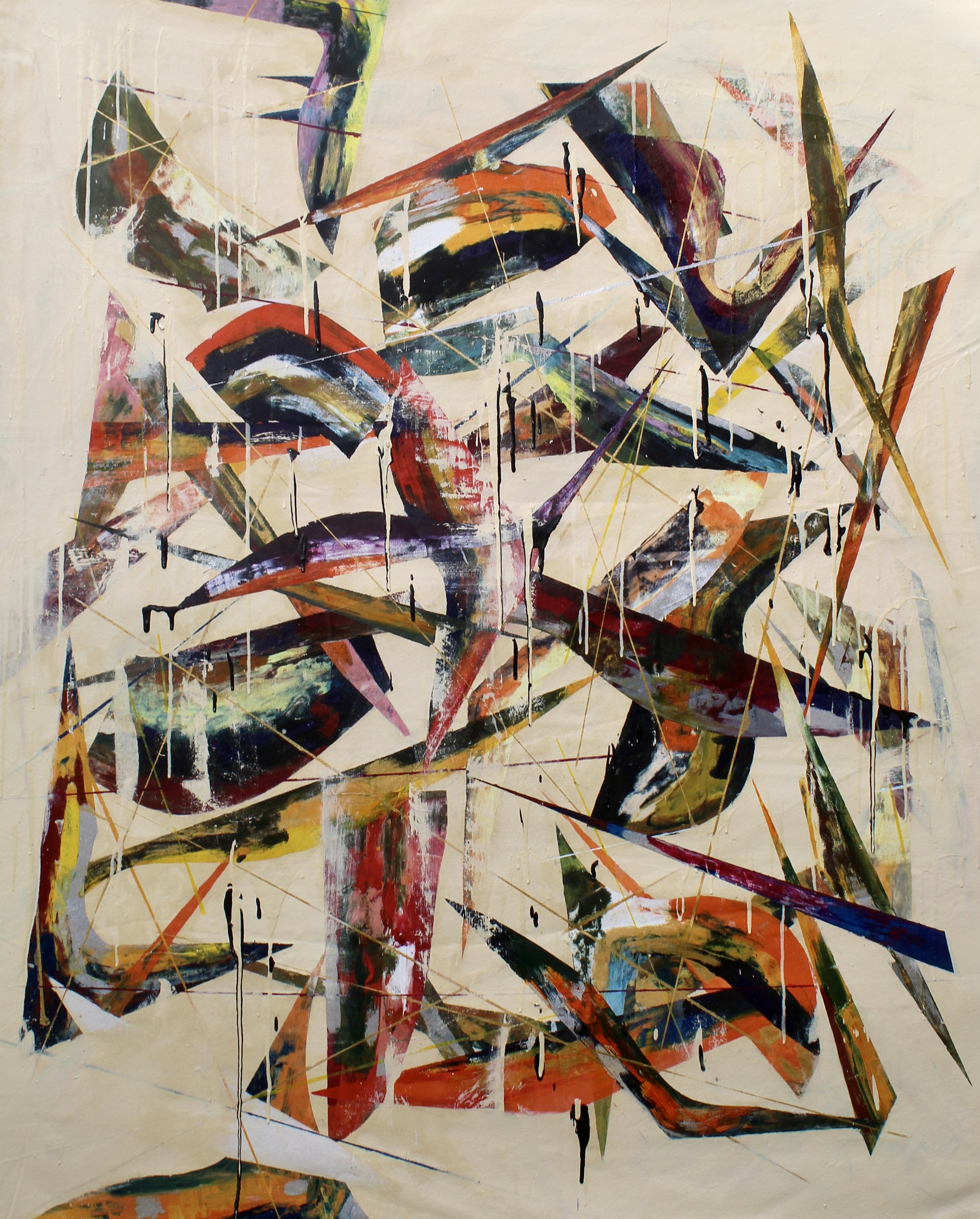
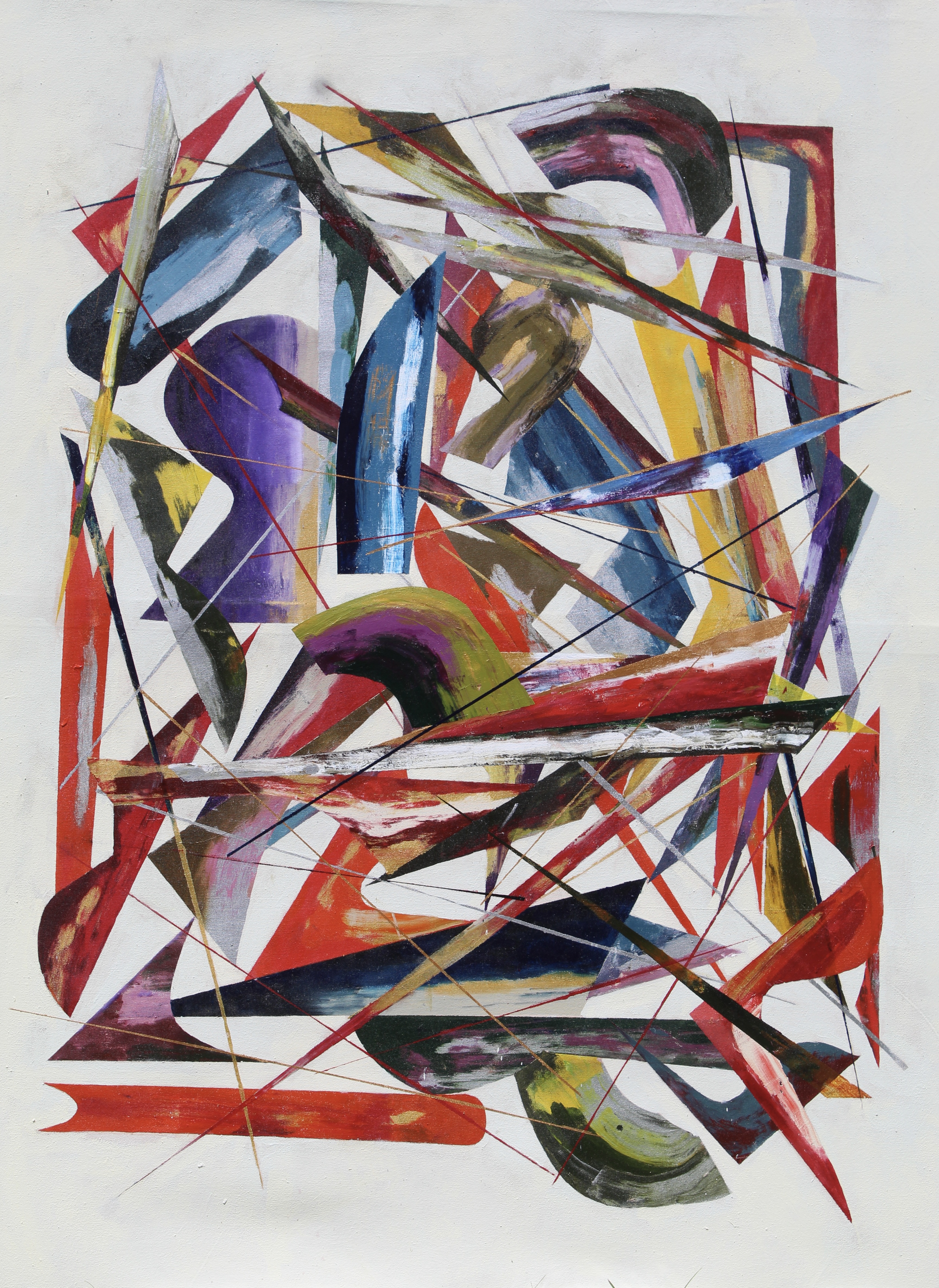
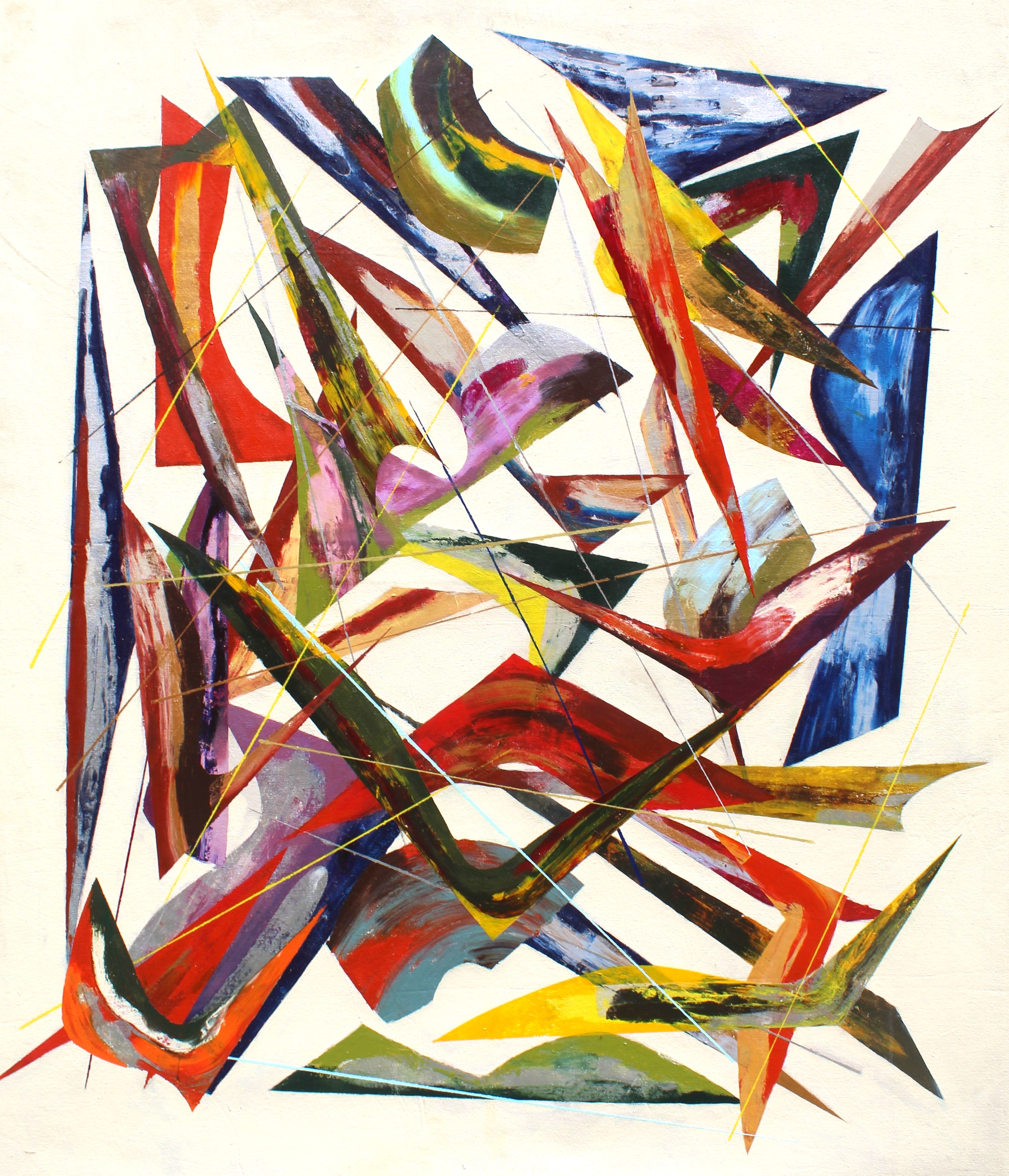
Three Elements of A Refraction examines light's encounter with matter as both optical fact and perceptual challenge. Ríos isolates the three-stage process of refraction—incident ray, point of incidence, refracted ray—using it as structural framework for a body of work that questions how contemporary acceleration has diminished our capacity for sustained visual attention.
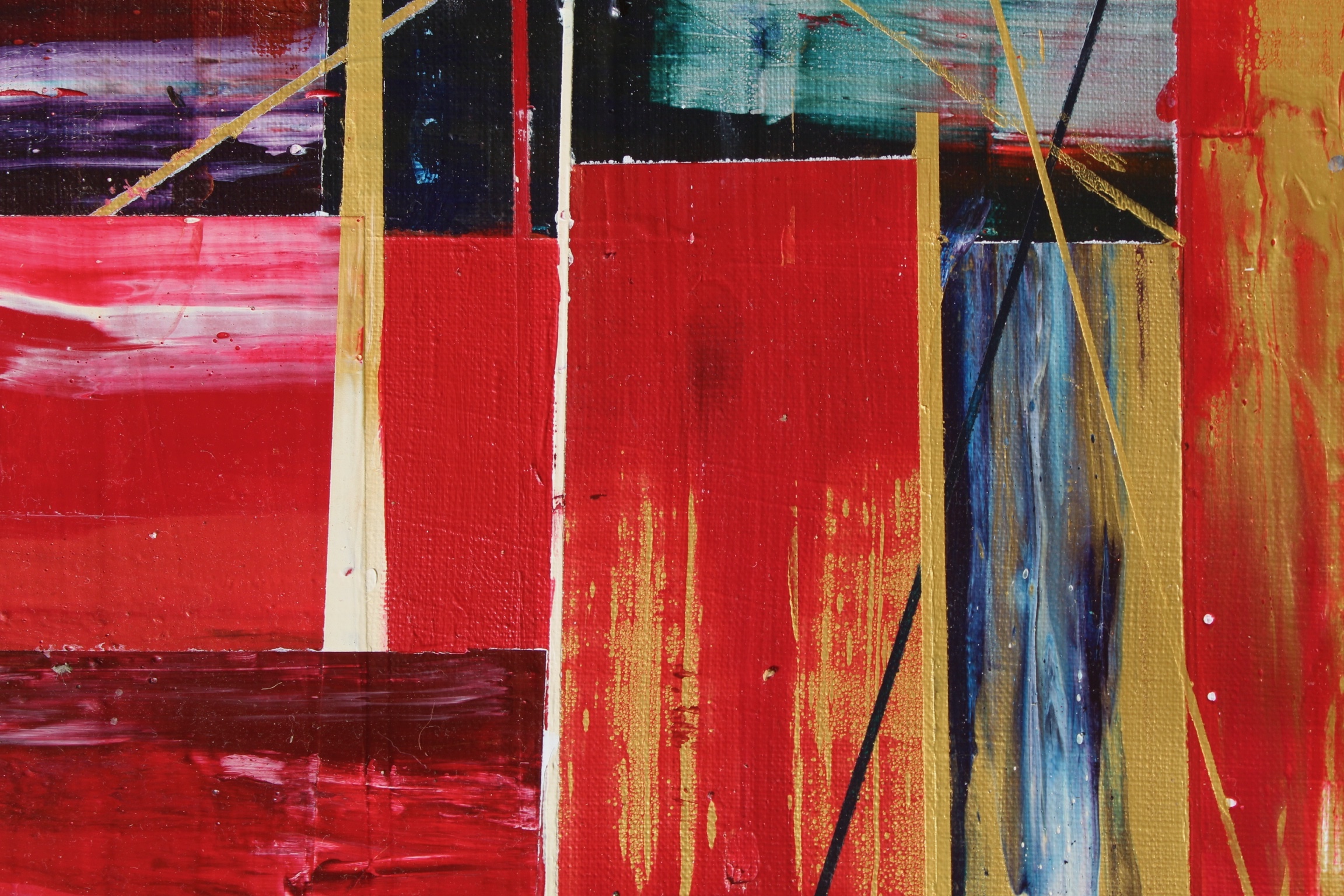
The paintings employ chromatic flattening, a technique in which acrylic is poured and layered to allow colors to coalesce organically. Linear elements trace light's trajectory while establishing geometric division. This approach extends Color Field painting's investigations into material behavior while reintroducing controlled gesture. The large-format canvases require physical engagement, resisting abbreviated viewing.
Working from Panama City, Ríos describes these works as "intimate spaces for absolute personal introspection"—paintings that demand optical commitment rather than passive consumption. The exhibition proposes that sustained attention to physical phenomena constitutes a form of resistance to distraction. Refraction functions here as both subject and method: a reproducible optical event made visible through paint's material properties.
The body of work positions abstraction not as departure from observable reality but as means of documenting it. These are paintings of something that exists—light bending through matter—insisting that deliberate looking might recalibrate habitual perception.
.jpg)
.jpg)